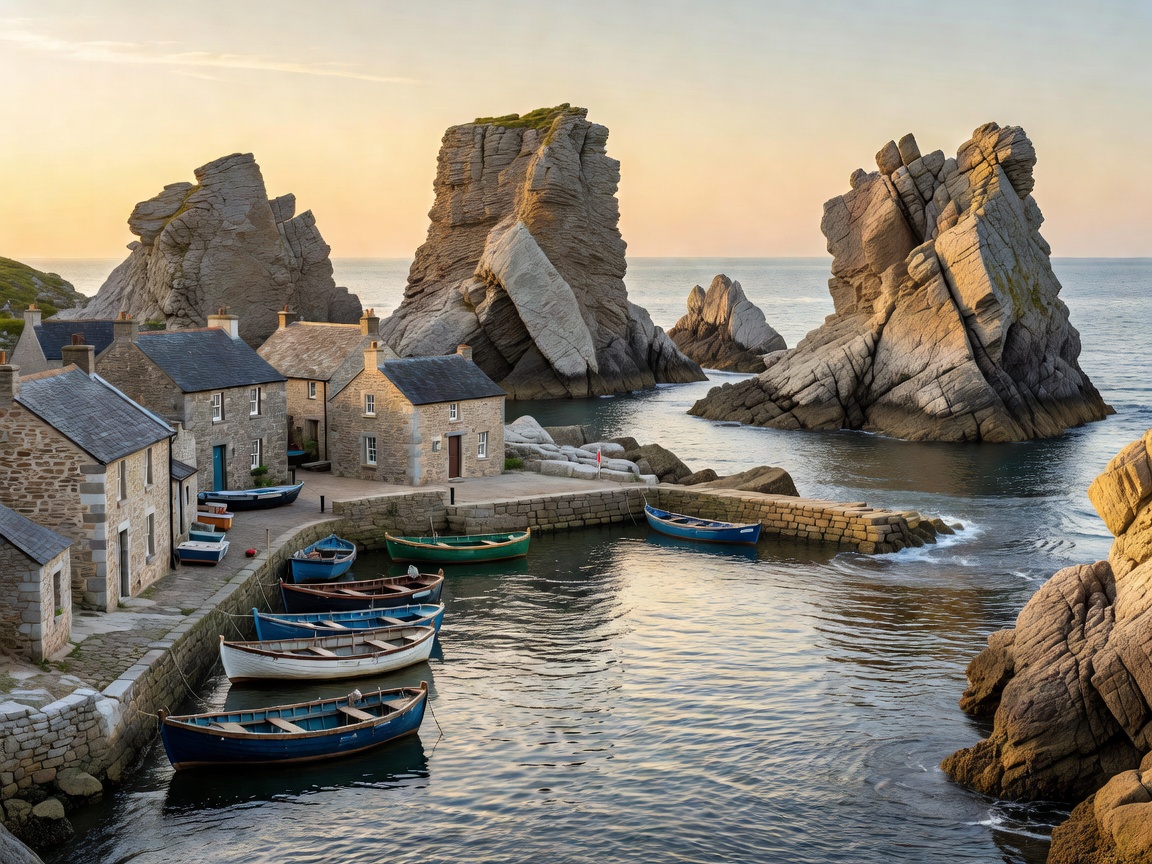
Where Tradition and Maritime Geography Converge
Northern Ireland’s rural villages reflect unique social planning: from estate villages designed to house tenant craftsmen to fortified coastal coves engineered for herring skiffs.
Vernacular Architecture in Northern Irish Settlements
Unlike modern suburban sprawl, the historic villages of Northern Ireland are anchored to their local topography and native building materials. In the Glens of Antrim and along the North Channel, local basalt and lime-washed sandstone dominate cottage walls, capped with Welsh slate or maritime thatch. In County Down, Mourne granite gives village walls and harbour quays an enduring grey-silver solidity that withstands punishing Atlantic winters.
Visiting these villages offers insight into how communities balanced harsh maritime weather, land tenancy systems, and artisan trades such as kelp harvesting, linen spinning, and salmon netting.
Four Preserved Rural Settlements Examined
Cushendun (County Antrim)
Architectural Style: Designed in 1912 by architect Clough Williams-Ellis (famed creator of Portmeirion in Wales) for Ronald McNeill. Features distinctive whitewashed Cornish-style cottages with slate roofs, pebble-dash walls, and Gothic door mouldings.
- Highlights: Maud’s Cottages, the stone bridge over the River Dun, and 400-million-year-old red conglomerate sea caves.
- Tips: National Trust protected; park at the designated village entrance to protect narrow residential lanes.
Ballintoy (County Antrim)
Architectural Style: An intimate harbour hamlet accessed by a steep, twisting switchback road descending past limestone cliffs. The harbour was constructed from squared basalt blocks to export sett stones and limestone.
- Highlights: Dramatic raised sea stack formations, authentic lobster potting vessels, sea-spray tearoom.
- Tips: Steep single-track approach road with limited passing points; congested during summer afternoons.
Strangford & Portaferry (County Down)
Architectural Style: Facing twin villages situated at "the Narrows"—the rapid tidal bottleneck connecting Strangford Lough to the Irish Sea. Dominated by 18th-century Georgian terraces, defensive tower houses, and quayside inns.
- Highlights: Strangford Castle, historic ferry crossing spanning 8 knots of tidal current, fresh Lough seafood.
- Tips: Vehicle ferry runs at 30-minute intervals throughout daylight hours; windy waterfronts.
Glenarm (County Antrim)
Architectural Style: The southernmost of the nine Glens, anchored by the 17th-century Glenarm Castle barbican gate. Characterised by uniform limestone townhouses and historic coaching inns.
- Highlights: Historic walled garden, ancient salmon river, peaceful coastal marina.
- Tips: The castle estate is privately owned with seasonal access to the walled garden; quiet winter off-season.
Community Considerations for Independent Travellers
Because these heritage villages are functioning rural homes—not theme parks—thoughtful behaviour ensures local communities welcome continuing exploration:
- Harbour Etiquette: Quaysides at Ballintoy and Strangford are active working zones. Never obstruct slipways, block emergency rescue access, or touch commercial lobster gear.
- Residential Privacy: The picturesque cottages of Cushendun are private residences. Avoid peering through cottage windows or trespassing across cottage garden borders for photographs.
- Local Economy Support: Support independent village grocers, heritage bakeries, and family-run coastal taverns rather than stocking provisions exclusively at highway service centres.