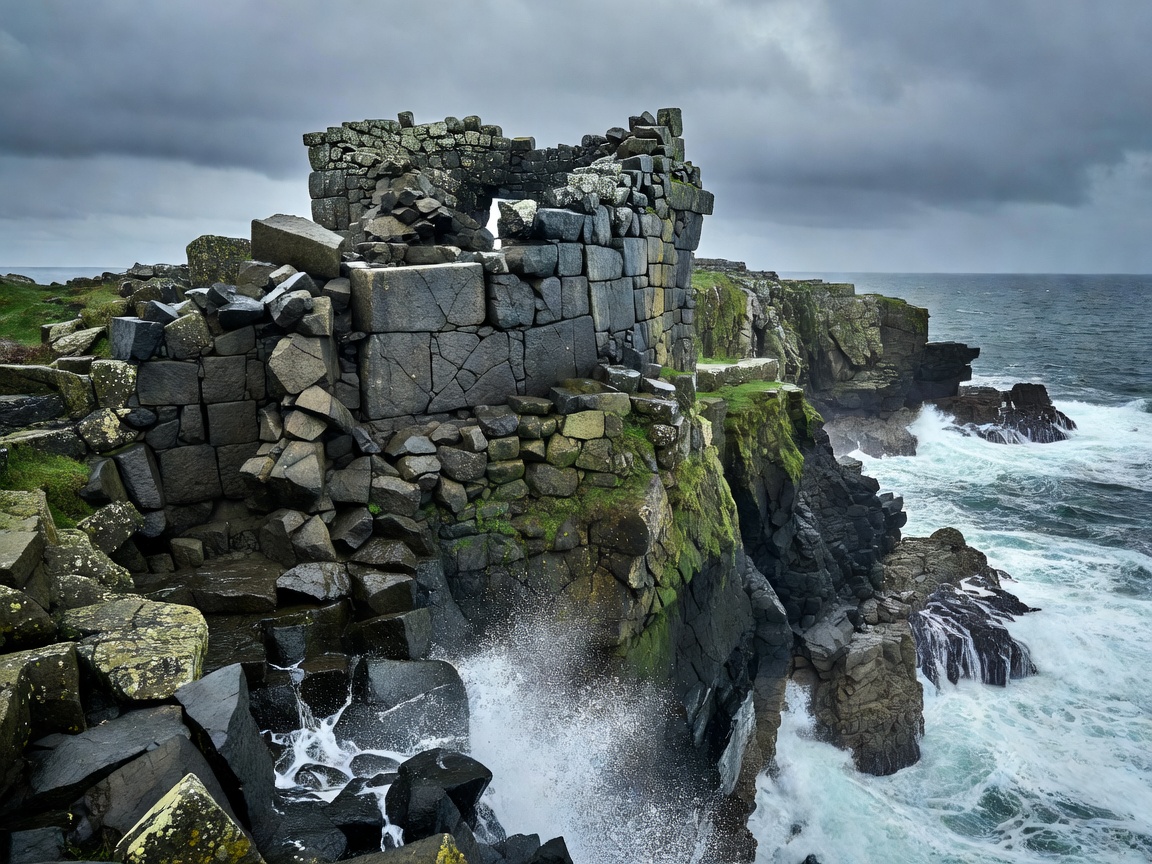
Where Medieval Power Met the Atlantic Fury
From isolated cliff-edge gables where MacDonnell clans fought off royal fleets to sheltered monastic cloisters on Strangford Lough, Northern Ireland’s ruins embody profound historical drama.
Historical Context: Gaelic Strongholds and Monastic Foundations
The historic monuments of Northern Ireland reflect distinct historical epochs: early Christian monastic settlements (5th to 11th centuries), Anglo-Norman stone tower houses and abbeys (late 12th to 14th centuries), and Gaelic-Norse maritime fortress bastions constructed by the MacDonnells of Antrim during the 16th century.
Unlike manicured, fully reconstructed heritage attractions, many of the country’s most evocative sites exist as romantic open-air ruins. They are open to the sea breeze, inhabited by jackdaws and nesting fulmars, and free from intrusive commercial installations.
Comparative Guide to Essential Heritage Ruins
Dunluce Castle (County Antrim)
Significance: Perched atop a sheer 30-metre basalt sea crag accessible only via a stone bridge over a dizzying chasm. Formerly the seat of the MacDonnell clan, complete with a submerged sea cave beneath the foundations.
- Pros: Unparalleled dramatic setting; extensive standing stone gables and towers; fascinating remains of an excavated 17th-century merchant town.
- Cons: Admission fee and managed visiting hours; exposed to high offshore wind; requires booking during peak summer.
Dunseverick Castle Promontory (County Antrim)
Significance: An ancient royal site visited by Saint Patrick in the 5th century and the historical terminus of one of the five ancient Royal Roads of Ireland. Only a single weathered residential tower wall remains on a precipitous basalt plug.
- Pros: Free, open access 24/7; zero commercialisation; direct access to the scenic North Coast clifftop walking path.
- Cons: Minimal surviving masonry; steep unguarded turf slopes dropping into ocean swells require extreme caution.
Grey Abbey (County Down)
Significance: Founded in 1193 by Affreca, daughter of the King of Man and wife of Norman conqueror John de Courcy. One of the finest examples of Anglo-Norman Cistercian Early English Gothic architecture in Ireland.
- Pros: Exquisite lancet windows, intact chapter house, meticulously reconstructed medieval physic herb garden; tranquil parkland setting.
- Cons: Limited interior shelter; grounds can be waterlogged in late autumn; seasonal opening times for the visitor room.
Archaeological Spotlight: Nendrum Monastic Site
Situated on Mahee Island on the western shores of Strangford Lough, Nendrum represents one of the most complete early Christian monastic complexes in Western Europe. Founded reputedly by Saint Mochaoi in the 5th century, the site features:
- Concentric Stone Cashels: Three concentric oval dry-stone ramparts enclosing an inner sacred precinct, middle agricultural work area, and outer living zone.
- World’s Oldest Tide Mill: Excavated wooden tidal mill engineering dating precisely to 619 CE and 789 CE via dendrochronological analysis of oak mill races.
- Stone Sun-Dial: A reconstructed 9th-century carved stone sundial showing canonical prayer hours, set into the wall of the ruined church.
Visiting Ethics & Structural Safety
Ancient dry-stone and lime-mortar architecture is vulnerable to footfall and weather wear:
- Do Not Climb Masonry: Never scale ruined gables or fragile window sills. Many walls stand without internal timber floor joists and are vulnerable to mortar collapse.
- Leave Metal Detectors at Home: All scheduled historic monuments in Northern Ireland are protected under the Historic Monuments and Archaeological Objects (Northern Ireland) Order 1995. Unauthorised excavation is strictly prohibited.
- Low-Season Photography: For dramatic low-angled light across coastal ruins, visit between November and February during sunrise or sunset, when Atlantic storms bring dramatic cloud scapes.