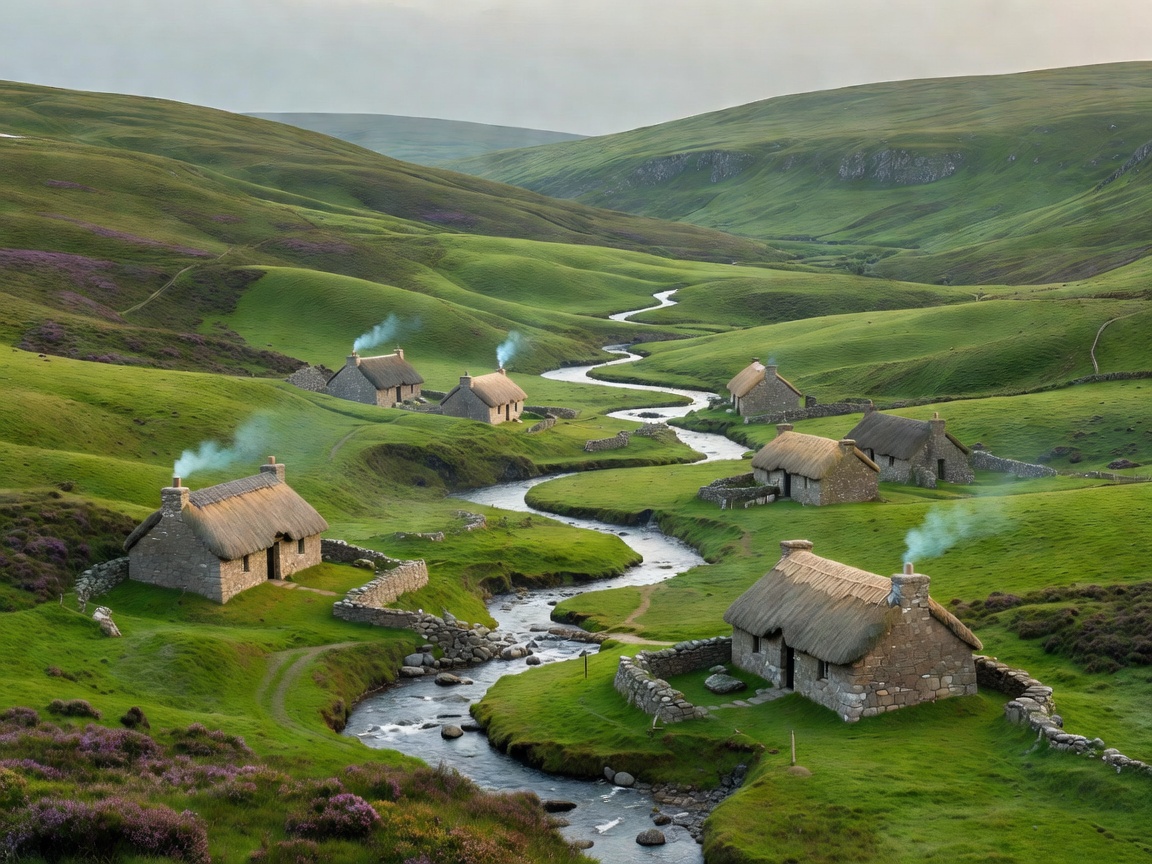
The Glens of Antrim: Where Basalt Meets Ancient Oak
Ranging from Glenarm in the south to Glentaisie in the north, each glen possesses its own microclimate, folklore, and hydrological character. While Glenariff draws day visitors with its managed boardwalks, Glenballyemon and Glendun offer pristine solitude.
Geological Origins and Topographic Realities
The Glens of Antrim were hollowed during successive Quaternary glacial events, as ice sheets moving seaward exploited fault lines in the Antrim plateau. The geology displays dramatic vertical contrast: impermeable black Tertiary basalt overlies soft Cretaceous white limestone (locally known as chalk) and Jurassic mudstones. This geological superposition creates a landscape of perched aquifers, steep escarpments, and spontaneous hillside springs that fuel lush native woodland corridors.
While many international visitors speed along the A2 Antrim Coast Road without glancing inland, the true character of this Area of Outstanding Natural Beauty reveals itself only when you turn westward into the valleys. The lower glen sections shelter hazel, sessile oak, and ash woodlands, carpeted in wood anemones and wild garlic in early spring. Higher up the valley walls, trees give way to gorse, dry stone sheep enclosures, and expansive heather bogs that stretch toward Trostan—the highest summit in County Antrim at 550 metres.
Comparing the Glens: Where to Walk
Each glen maintains a distinct character. Understanding their trade-offs ensures you allocate your hiking time effectively:
Glenariff (The Queen of the Glens)
The Reality: Famous for its dramatic gorge and cascading waterfalls. The lower gorge features maintained timber boardwalks constructed originally in the late 19th century by railway entrepreneurs.
- Pros: Exceptional dramatic gorge photography, easy footing along river boardwalks, sheltered cafe and parking amenities at the visitor centre.
- Cons: High visitor volume during summer midday hours; paid parking barrier; less wilderness immersion than northern glens.
Glendun (The Brown Glen)
The Reality: Carved by the River Dun, spanned by the graceful three-arched Charles Lanyon Viaduct (built 1839). Characterised by winding narrow single-track boreens, ancient hazel copses, and serene silence.
- Pros: Virtually zero tour bus traffic; exceptional birdwatching (dippers, buzzards, grey wagtails); pristine rural pastures.
- Cons: Limited dedicated laybys; narrow roads require reversing into passing places; no visitor facilities.
Glenballyemon
The Reality: Resting directly beneath the iconic table-topped silhouette of Lurigethan mountain. A drier, pastoral glen with steep sheep runs and old iron-ore mining cart paths.
- Pros: Direct foot access to ridge ascents with panoramic vistas over the Sea of Moyle toward the Mull of Kintyre; peaceful farming hamlets.
- Cons: Steep ascent gradients; paths frequently muddy after heavy rainfall; livestock present at all seasons.
Route Specifications & Access Notes
For independent walkers seeking a complete day walk, we highlight the Lurigethan and Glenballyemon loop starting from the edge of Cushendall:
- Distance: 7.8 kilometres circuit.
- Total Ascent: 340 metres.
- Expected Duration: 2.5 to 3.5 hours depending on surface saturation.
- Trail Surface: Tarmac lane transitioning to wet grass trods, rocky step stiles, and open mountain heather.
- Navigation: OSNI Discoverer Series Map Sheet 5 (1:50,000 scale) or digital equivalent with GPS offline cache. Compass recommended during maritime fog.
Equipment Advice & Seasonality
Because the Antrim Glens sit proximate to the North Channel, damp maritime winds produce sudden cloud lowering and wet terrain year-round. Water-resistant trekking boots with deep lugged Vibram soles are essential; trail running shoes will quickly become waterlogged on boggy peaty flanks. Gaiters are highly advantageous between October and April to protect against saturated heather and brackens.
Spring (April to late May) delivers the optimal balance of dry spells, blossoming blackthorn, and emerging woodland bluebells. Autumn (late September to November) coats the oak woodlands in brilliant copper tones, accompanied by roaring spate waterfalls after seasonal Atlantic rains.